Commercial Fire Damage Restoration For Businesses In Delaware & Maryland
A fire in a commercial building rarely stays contained to one room — smoke travels through the HVAC system and hallways, soot settles on surfaces far from the flame, and water from firefighting efforts adds its own damage on top. C&B Complete Cleaning & Construction provides commercial fire damage restoration across Delaware and Maryland, helping business owners, property managers, and facility teams move from emergency stabilization through cleanup, documentation, and repair planning.
Call us once the fire department has cleared your property for entry. We answer the phone 24/7 for fire emergencies, and a First Responder is on site within 90 minutes, with an IICRC-certified technician on every crew. Every job starts with a free inspection so you understand what actually needs attention before any work begins. Inspections are free.
If your commercial property has fire, smoke, or soot damage, call (302) 381-9891. The sooner we assess it, the sooner we can start protecting what's left and get your operation moving toward reopening.
Stabilize The Property And Reduce Business Interruption
The first job after a commercial fire is stopping the damage from spreading: extracting the water left from firefighting, getting drying underway, and containing smoke and soot so unaffected parts of the building can keep operating. If the fire opened the roof, emergency roof tarping keeps weather out while cleanup and repairs are planned — temporary protection, offered for fire loss only. Boarding up other exterior openings on a commercial building is a job for a commercial board-up contractor.
Once the property is secure, we assess smoke migration, water from firefighting, structural concerns, and affected contents, and use that to prioritize what happens first. We ask what parts of your operation matter most — a point-of-sale area, a kitchen, inventory storage — and sequence stabilization and cleanup around that where the damage allows. We won't promise a set reopening date before we've inspected the property; what we will do is give you an honest read on the scope once we have.
Smoke and soot rarely stay where the fire started. Rooms with no visible flame damage can still hold a smoke residue layer on walls, ceilings, and contents, and HVAC systems can carry that residue into spaces well away from the fire itself. Part of our initial assessment is tracing how far that migration reached, since it changes the size of the area that needs cleaning and treatment, not just the room where the fire happened.
Fire-damaged commercial buildings also come with access and security questions a house doesn't — alarm systems, building security staff, and areas that need a specific person to unlock. We coordinate that access with whoever you designate before a crew shows up, so the job isn't delayed waiting on someone to arrive with a key to a restricted area.
What Our Commercial Fire Damage Restoration Process Includes
After stabilization, cleanup begins — removing fire debris, ash, and soot-covered materials that can't be saved, and protecting the areas that weren't affected. Dry soot, oily residue from a kitchen fire, and residue from synthetic materials all behave differently, so we inspect the residue before we clean anything; the wrong method can smear or set a stain that a proper approach would have removed. In a commercial kitchen, that often means grease-laden soot on hoods, equipment, and stainless surfaces, which calls for a different cleaning approach than soot on drywall or ceiling tile in an office.
Smoke odor doesn't go away on its own, and it can settle into porous materials, textiles, and insulation long after the visible soot is gone. Real odor removal starts with finding and removing the source before any deodorization treatment happens — a surface wipe-down rarely solves it by itself. If your HVAC system was running during or after the fire, we can evaluate whether it needs professional attention before it's turned back on, since a contaminated system can spread residue and odor into rooms that were otherwise untouched.
Water left behind from firefighting gets extracted and the structure dried the same way we'd handle any other water damage job — equipment runs 24 hours a day, and most drying projects take 3 to 7 days, though larger commercial losses can take longer. That water can also be contaminated depending on what burned and how it traveled through the building, which affects how we handle cleanup and disposal. Contents that were exposed to smoke but not destroyed — furniture, equipment, inventory, files — get evaluated on-site so you know early which items are worth cleaning and which aren't, rather than waiting until the end of the job to find out.
Documentation For Owners, Managers, And Insurance Stakeholders
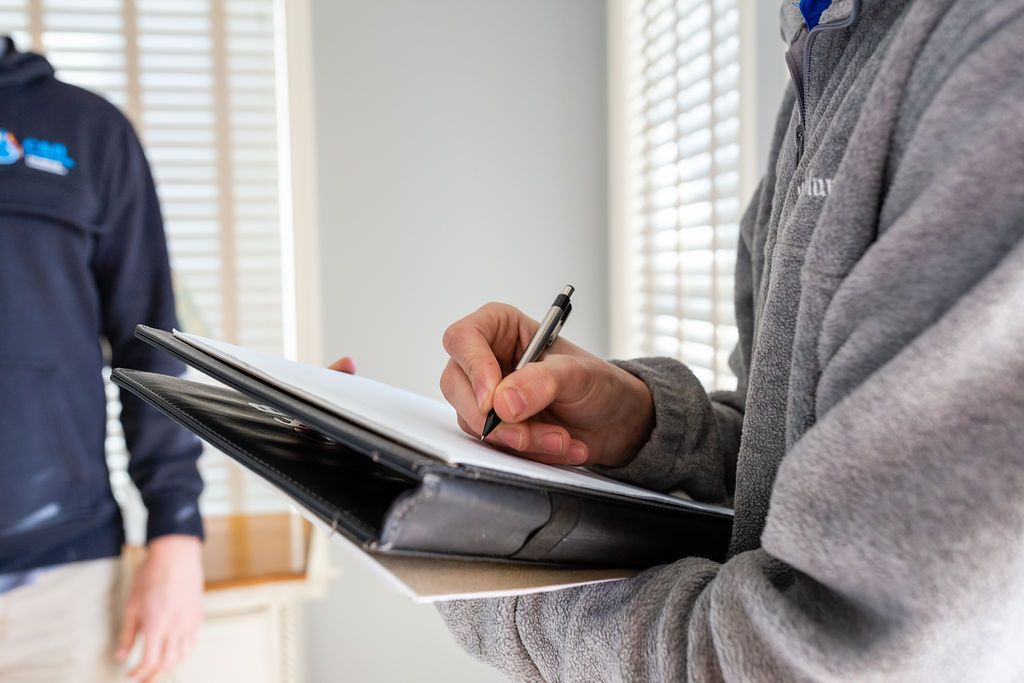
We document every commercial fire job as we work — photos, an itemized scope of affected areas, and notes on smoke, soot, and water damage. That record is what most of our commercial clients use when talking to ownership, their insurance carrier, or their own compliance files.
Documentation on a fire job builds day by day rather than getting assembled after the fact, so as cleanup, odor treatment, and drying move forward, there's already a photo and scope record behind each step. Your Client Care Coordinator is a single point of contact for scheduling, status updates, and questions, so a property manager or facility director isn't chasing down a different person every call. Our Adjuster Liaison prepares that documentation and sends it directly to your carrier, and we price the work using Xactimate. What we can't do is tell you what your policy covers — coverage is determined by your insurance carrier, based on your policy and the cause of loss. We work with all insurance companies, and our job is to give you and your carrier everything needed to have that conversation quickly.
Facility Types And Commercial Situations We Support
We restore fire, smoke, and water-from-firefighting damage inside offices, retail spaces, restaurants, and warehouses throughout our six-county service area. Each property type brings its own priorities beyond the cleanup itself: an office usually means protecting electronics, servers, and documents from smoke and any water exposure; a restaurant adds health-code and kitchen equipment concerns on top of standard smoke and soot cleaning; and a warehouse often means assessing inventory and racking for smoke exposure across a much larger footprint than the fire itself.
A contained kitchen fire, an electrical fire in an office suite, or a larger structure fire in a warehouse all start the same way with us — inspect first, then build the plan around what we actually find, rather than a standard script applied to every building regardless of size.
Larger or multi-area commercial fire losses sometimes need more crew, more equipment, and a longer documentation trail than a standard job — our large loss restoration page covers what that scale of response looks like, including how we sequence work across a bigger footprint.
Bring It Home: Get Commercial Recovery Moving
If your commercial property has fire, smoke, soot, or water damage from firefighting, call C&B Complete Cleaning & Construction. We'll secure openings if needed, begin cleanup, document everything, and walk you through next steps for smoke restoration, odor removal, and repairs — and our full-service reconstruction takes the job from the first call to the finished rebuild.
We've served this region since 1986, and our crews live in the communities where we work. A contained kitchen fire and a major structure fire both start the same way with us — a real inspection, an honest scope, and a plan built around what actually happened at your property, not a standard script.
Call (302) 381-9891 any time, day or night, for active fire damage. For a planned inspection or a non-emergency scope review, request service online and we'll follow up within 15 minutes during business hours. We're licensed, bonded, and insured (DE 2007223623, MHIC 132085), and an IICRC-certified technician is on every crew we send.