Structural Dehumidification Services In Delaware & Maryland After Water Damage
Removing standing water is only part of drying a property — the air itself holds moisture too, and if humidity stays high, materials that look dry on the surface can stay damp underneath for much longer than they should. C&B Complete Cleaning & Construction provides structural dehumidification services across Delaware and Maryland as part of our water damage restoration process, pulling excess moisture out of the air so drywall, subfloor, framing, and contents can actually finish drying.
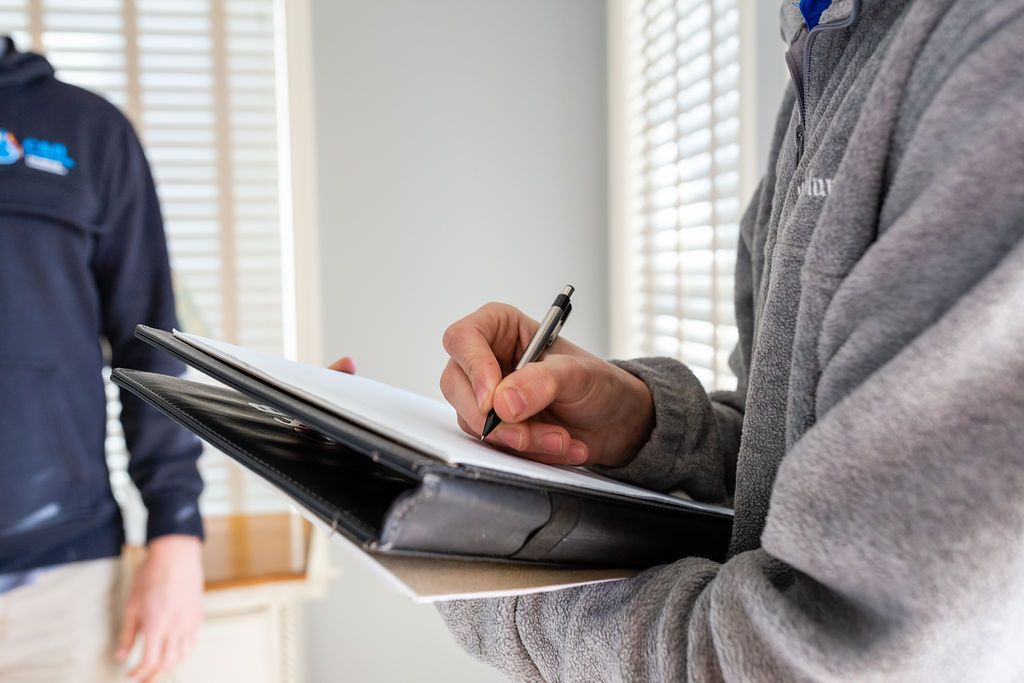
We answer the phone 24/7, and a First Responder is on site within 90 minutes of your call. Every crew includes an IICRC-certified technician, and we start with a free inspection to determine how much dehumidification a space needs and for how long, rather than setting up generic equipment and hoping for the best.
If you're dealing with water damage and need dehumidification to finish the job properly, call (302) 381-9891. Inspections are free, and getting humidity under control quickly makes a real difference in what can be saved.
When dehumidification is needed
Dehumidification becomes necessary any time water damage has raised the humidity in a space beyond what a room can dry out on its own — which describes most water damage situations beyond a very small, quickly contained spill. Signs it's needed include a musty or heavy smell, condensation on windows or cool surfaces, materials that still feel damp days after visible water was removed, or humidity readings that stay elevated even with windows open and fans running.
Dehumidification is almost always paired with air movers as part of a full structural drying plan rather than used alone — air movers keep air circulating across wet surfaces, and dehumidifiers pull the resulting moisture out of the air so it doesn't just resettle somewhere else in the room. Our structural drying page covers how the two work together across a full drying job.
How restoration dehumidifiers support structural drying
The dehumidifiers we use on a restoration job are built to handle far more moisture than a typical home unit — commercial and industrial-grade equipment sized to the square footage and the amount of water involved, not a single bedroom. We calculate how much dehumidification capacity a space needs based on the room's size, the materials affected, and how saturated they are, then adjust as the job progresses.
Air movers and dehumidifiers work together: air movers keep moisture evaporating off wet surfaces into the air, and dehumidifiers remove that moisture before it can resettle into materials nearby that are otherwise drying fine. Running dehumidification without enough air movement, or air movement without enough dehumidification, slows the whole job down and can even push moisture into areas that weren't affected to begin with. We track this balance with regular moisture readings rather than running equipment on a fixed schedule. Our moisture mapping page covers how we identify what still needs attention as a job progresses.
Basements, crawl spaces, and commercial spaces
Basements and crawl spaces tend to need more sustained dehumidification than other rooms, since they're naturally more humid, have less airflow, and often involve concrete or masonry that releases moisture slowly over time even after visible water is gone. A basement that flooded is a common example — our basement flooding page covers what a larger event like that typically involves, and dehumidification is usually a significant part of that drying timeline.
Commercial spaces bring their own considerations: larger square footage means more dehumidification capacity is needed, and keeping the rest of a building operational while equipment runs requires some coordination around business hours and foot traffic. We size equipment to the space regardless of whether it's a single-family home or a multi-room commercial building, and we explain the plan so you know roughly what to expect for equipment placement and noise while drying is underway.
Moisture readings and equipment adjustments
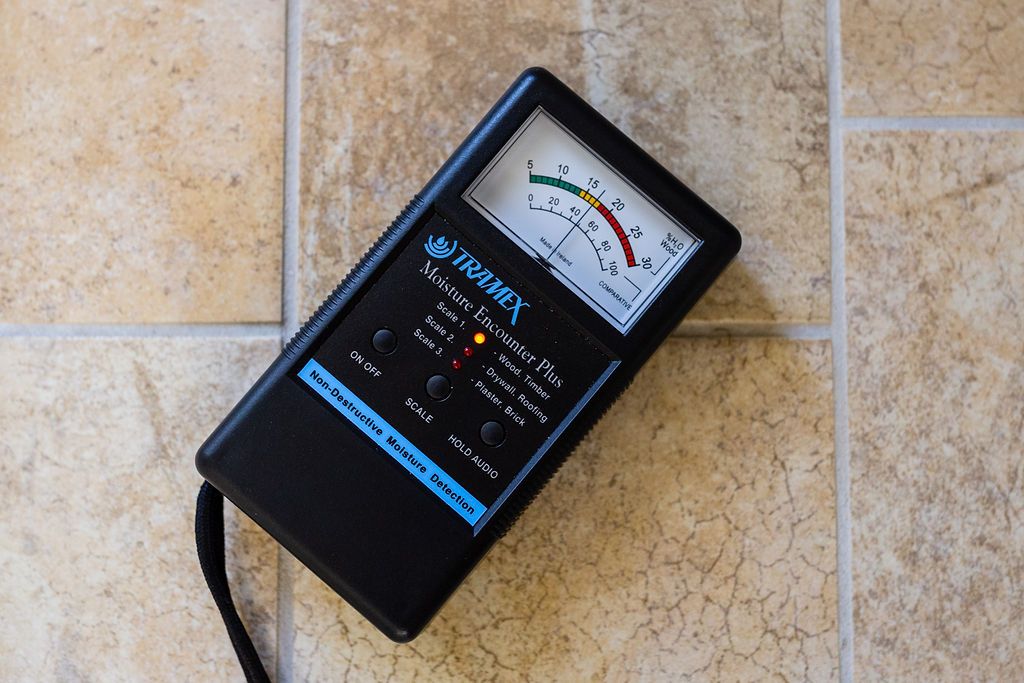
We don't run dehumidifiers on a set number of days and call it done — we take moisture readings throughout the job and adjust equipment based on what those readings actually show. A space that's drying faster than expected might need less equipment sooner; a space with more saturated materials might need dehumidification to run longer than average.
Most drying projects take 3 to 7 days, though heavily saturated basements, crawl spaces, or commercial spaces can take longer. Equipment runs 24 hours a day for best results, since interrupting dehumidification partway through can let humidity climb back up and undo some of the progress already made. We check in regularly rather than setting equipment and coming back only at the end, so we can catch a space that's drying more slowly than expected and adjust before it becomes a bigger problem.
When dehumidification is not enough by itself
Dehumidification lowers humidity in the air, but it doesn't replace extraction, targeted air movement, or removing materials that are too saturated to dry in place. A heavily soaked carpet pad, drywall that's been wet for days, or standing water that hasn't been extracted yet all need their own steps before dehumidification can finish the job effectively — running dehumidifiers alone in a room with standing water accomplishes very little.
That's why dehumidification is almost always one piece of a broader restoration plan rather than a standalone service on its own. We evaluate the whole situation during our initial inspection and build a plan that includes extraction, air movement, dehumidification, and material removal where it's actually needed, rather than treating any one step as sufficient by itself.
Call C&B for dehumidification in Delaware & Maryland
If your property has water damage and humidity isn't coming down on its own, call C&B Complete Cleaning & Construction for dehumidification services across Delaware & Maryland. We'll assess what's needed, set up the right equipment for the space, and track moisture readings until materials actually test dry. This is one piece of the broader water damage restoration work we handle for homes and, through our commercial restoration services, businesses across the region.
We've served this coastline since 1986, we're licensed, bonded, and insured (DE 2007223623, MHIC 132085), and an IICRC-certified technician is on every crew we send. Call (302) 381-9891 any time, day or night, or send us a request online and we'll follow up within 15 minutes during business hours.