
Hidden Mold Behind Walls and Drywall in Delaware & Maryland
A musty smell with no visible source, a stain that keeps reappearing, drywall that's gone soft near the baseboard — these are the kinds of signs that make people wonder what's happening inside the wall. C&B Complete Cleaning & Construction inspects for hidden mold across Delaware and Maryland using moisture readings and targeted checks, not guesswork, so you know what you're dealing with before any wall comes open.
Every crew includes an IICRC-certified technician, and we've worked in this region since 1986. We answer the phone 24/7, and a First Responder is on site within 90 minutes of your call. If you suspect mold behind a wall, don't cut into anything before we arrive — call (302) 381-9891.
Signs There May Be Mold Behind Drywall
Hidden mold doesn't always announce itself, but these are common clues:
- A persistent musty odor with no visible source in the room.
- Staining, discoloration, or a spot that keeps coming back after cleaning.
- Bubbling, peeling, or cracking paint.
- Drywall that feels soft, spongy, or warped when pressed.
- Warped baseboards or trim near the floor.
- A history of a leak or flood in the area, even one that seemed resolved.
- Recurring mold in a bathroom or other room that keeps returning despite cleaning.
Any one of these is worth an inspection. None of them tell you how much is actually there — that's what the inspection is for.
What Causes Mold Inside Walls
Walls stay hidden, which is exactly why moisture problems inside them can run longer before anyone notices. Common causes include a slow plumbing leak inside the wall cavity, a roof leak traveling down through framing, a window or door that's letting water in around the frame, flooding that soaked the bottom of drywall and never fully dried, condensation from a poorly insulated exterior wall, or wet insulation left over from water damage that was only partially addressed. In most cases, the wall itself isn't the problem — it's whatever's feeding moisture into it.
How Professionals Inspect for Hidden Mold
We don't start by cutting drywall open. Our process is to narrow down where the problem actually is first:
- A visual review of the area — staining, warping, paint condition, and anything else visible from outside the wall.
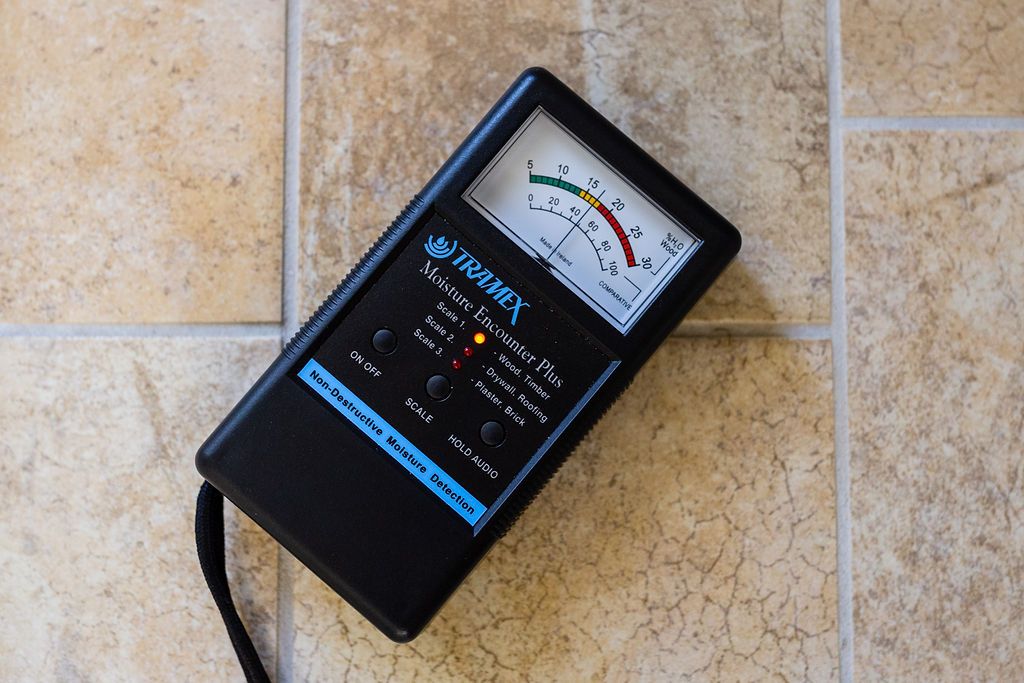
- Moisture meter readings across the suspect area and the surrounding wall, to map how far the dampness has spread.
- Thermal imaging where it helps confirm a moisture pattern, used alongside the moisture meter rather than in place of it.
- Limited, targeted openings only where readings indicate a problem — not blanket demolition.
- Lab-based sampling, if your situation calls for it, handled by a trusted, independent certified hygienist we coordinate for you rather than performed by us.
This narrows the work to where it's actually needed, instead of opening up a whole wall to find one damp stud.
Removing Moldy Drywall Safely
Once we know what we're dealing with, removal follows a set process: containment to keep spores and debris out of the rest of the space, removal of contaminated drywall and insulation that can't be reliably cleaned, cleaning and treatment of the framing behind it when the wood itself hasn't been compromised, and drying with moisture readings to confirm the cavity is actually dry before anything closes back up. From there, our team can coordinate the drywall replacement and finish work, so one company takes the job from the first call to the finished rebuild.
Get Hidden Mold Help in Delaware & Maryland
If you suspect mold behind a wall, don't start cutting into it without a plan — disturbing hidden growth without containment can push spores into rooms that were never affected. Call C&B Complete Cleaning & Construction and we'll schedule a free inspection to find out what's actually there and how far it's spread.
We're licensed, bonded, and insured (DE 2007223623, MHIC 132085), with an IICRC-certified technician on every crew and free inspections. Call (302) 381-9891, or send us a request online and we'll follow up within 15 minutes during business hours.