
Bathroom Mold Removal for Showers, Ceilings, Walls, and Vanities in Delaware & Maryland
Bathrooms grow mold more than any other room in the house, for an obvious reason — they're wet more often than anywhere else. Some of what you're seeing is ordinary surface mildew that a homeowner can manage. Some of it is a sign of a leak, a ventilation problem, or damage that's spread further than the visible spot. C&B Complete Cleaning & Construction removes bathroom mold across Delaware and Maryland, and we'll tell you plainly which situation you're in before we recommend anything.
We look at showers, tubs, ceilings, vanities, and the walls around them — anywhere moisture collects and doesn't fully dry between uses. Every crew includes an IICRC-certified technician, and we've worked in this region since 1986. We answer the phone 24/7, and a First Responder is on site within 90 minutes of your call to help you figure out whether this is a cleaning job or something bigger.
Why Bathroom Mold Keeps Coming Back
If you've cleaned the same spot more than once, the mold isn't the actual problem — the moisture behind it is. Common causes we see:
- Humidity from showers and baths that doesn't get pulled out by the exhaust fan.
- A bathroom fan that's undersized, clogged, or not vented outside at all.
- Grout and caulk that have failed, letting water get behind tile or into the wall.
- A slow plumbing leak at a supply line, drain, or the base of a toilet or vanity.
- Condensation on a ceiling above a poorly insulated attic space.
- Wet drywall from a shower pan or surround that isn't sealing properly.
Cleaning the surface without fixing one of these just resets the clock. The mold comes back because the conditions that grew it never changed.
When Bathroom Mold Needs Professional Removal
Small, isolated spots on grout or caulk are often manageable with a household cleaner and better ventilation habits. It's worth calling a professional when:
- The growth covers more than a small patch, or keeps spreading.
- Drywall or ceiling material is soft, stained, or bubbling.
- There's a musty odor even after cleaning.
- The growth is dark or black-colored, not just gray-green surface mildew.
- It's returned more than once after you've cleaned it.
- You suspect it's connected to a wall cavity or a leak you can't see.
None of these mean the whole bathroom needs to be gutted — they mean the problem is bigger than a surface wipe-down, and an inspection will tell you how much bigger.
Bathroom Mold Removal Process
Here's how we approach a bathroom mold job once we're on site.
Inspection and Moisture Checks
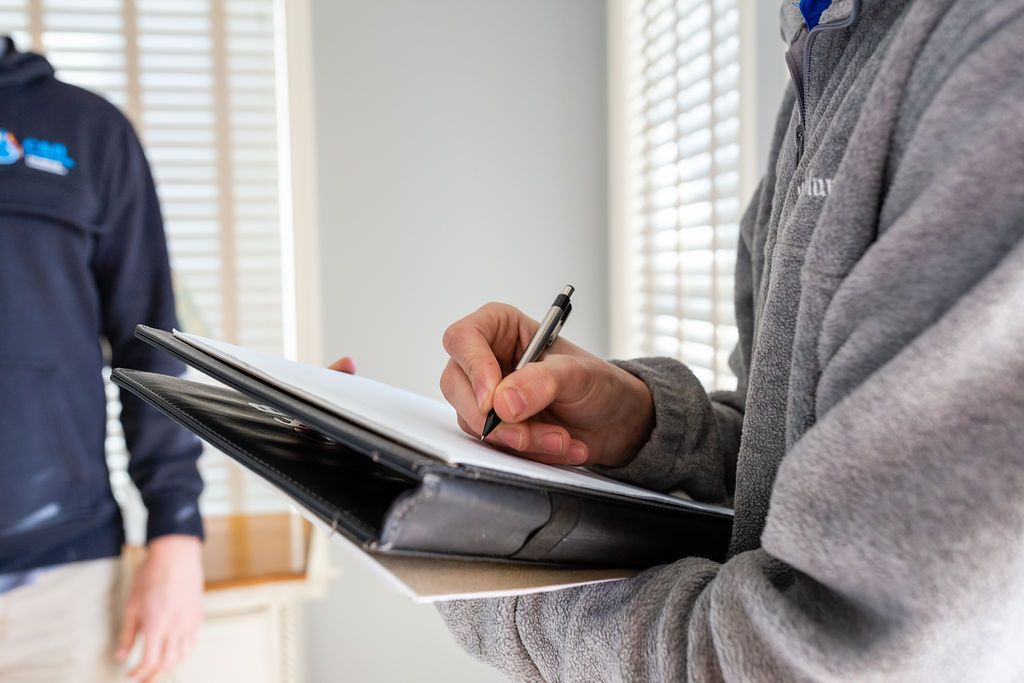
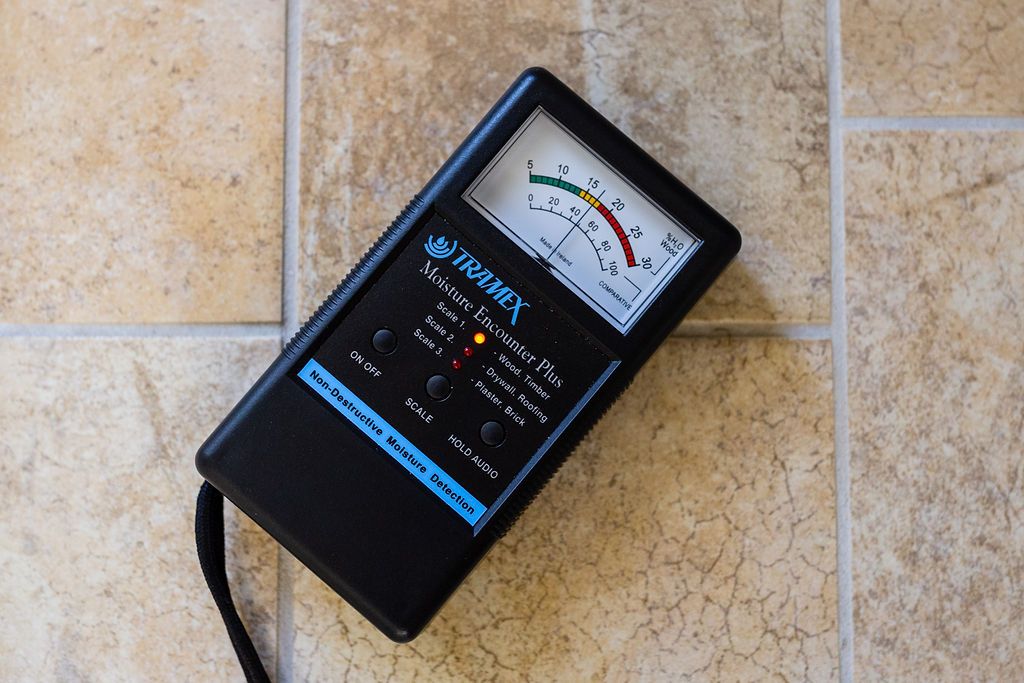
We start by looking at the affected area and checking moisture levels with a meter — not just eyeballing the spot you noticed. This tells us whether the problem is surface-level or whether it's reached the drywall, subfloor, or framing behind the tile.
Protecting Adjacent Areas
Before we clean or remove anything, we protect the parts of the bathroom that aren't affected, so cleanup doesn't spread spores or debris into the rest of the space.
Cleaning Salvageable Surfaces
Tile, grout, and most hard, non-porous surfaces can usually be cleaned and treated rather than replaced, as long as the mold hasn't gotten behind them.
Removing Damaged Porous Material
Drywall, ceiling material, or backer board that's been contaminated typically has to come out. We'll show you what falls into that category and why before anything comes down.
Drying
Once the source is addressed and material is removed if needed, we dry the space and confirm with moisture readings — not just visually — that it's actually dry before anything gets closed back up.
Prevention Recommendations
We'll tell you what's driving the moisture in your bathroom specifically — ventilation, grout, a leak — so you're not just cleaning the same spot again in six months.
Bathroom Mold Behind Walls, Tile, or Ceilings
Mold that's spread behind tile, into a wall cavity, or above a ceiling is a different job than a surface clean. If moisture readings or a musty odor point to something we can't see without opening the wall, that's a hidden mold situation — our mold behind drywall page covers what that inspection and removal process looks like.
If the bathroom mold followed a specific event — a leaking supply line, an overflow, or a leak from a floor above — and materials are still wet, that's a water damage situation first. Our water damage restoration team handles extraction and drying; we don't repair plumbing or fixtures ourselves, but we'll identify the moisture source and route you to the right next step.
Get Bathroom Mold Help in Delaware & Maryland
If bathroom mold keeps coming back, has spread past a small spot, or you're not sure what you're dealing with, call C&B Complete Cleaning & Construction. We'll inspect the area with a free inspection, tell you honestly whether it's a cleaning job or a bigger moisture problem, and give you a clear next step either way.
We're licensed, bonded, and insured (DE 2007223623, MHIC 132085), with an IICRC-certified technician on every crew and free inspections. Call (302) 381-9891, or send us a request online and we'll follow up within 15 minutes during business hours.